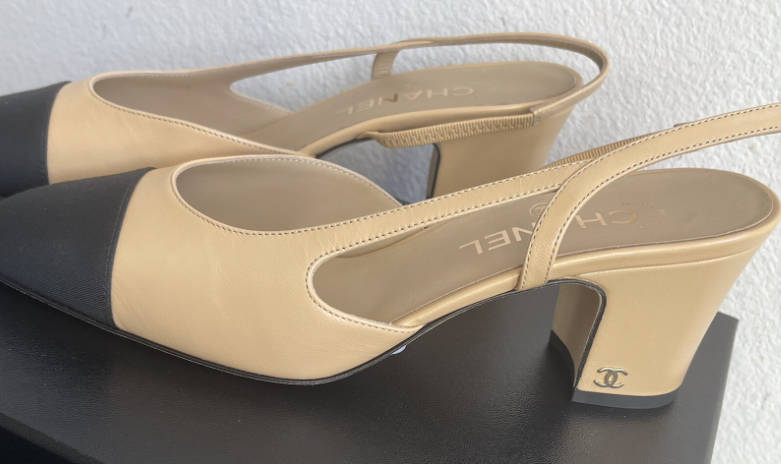
First introduced by Gabrielle 'Coco' Chanel in 1957 and subsequently reinterpreted by Karl Lagerfeld and Virginie Viard, the Chanel Two-Tone Slingback pump is widely considered the ultimate icon of Parisian chic and functional luxury. Designed originally to liberate women from the restrictive monochromatic footwear of the 1950s, the two-tone slingback combines a beige goat-skin leather body that visually lengthens the leg with a contrasting black grosgrain cap-toe that shortens the foot and protects the tip from scuffing. Handcrafted in Italy and France at the renowned Massaro atelier—Chanel’s dedicated Métiers d'Art footwear workshop—this classic 65mm block-heeled pump remains a permanent cornerstone of luxury wardrobes worldwide.
From a technical shoemaking perspective, the Chanel Slingback demonstrates remarkable attention to ergonomic proportion and material selection. The upper utilizes butter-soft, fine-grain goat-skin or lambskin that supplely conforms to the foot's shape, while the black grosgrain toe cap provides a durable, matte contrast. The signature elasticized slingback strap is engineered with hidden interior stretch bands, ensuring the heel strap remains firmly anchored against the Achilles tendon during movement without digging into the skin. Mounted on a stable, mid-height 65mm (2.5-inch) chunky block heel decorated with a subtle gold-tone CC metal logo plaque, the shoe delivers exceptional balance and all-day wearing comfort across urban environments.
Celebrated across generations by international royalty, corporate leaders, and fashion editors, the Chanel Two-Tone Slingback pump offers unparalleled styling versatility. It transitions effortlessly from daytime professional suiting and casual denim ensembles to elegant cocktail dresses and tweed outerwear. Preserving two-tone goat-skin and grosgrain footwear involves applying delicate leather nourishing creams exclusively to the beige body and using soft bristle brushes to clean the fabric toe cap. As Chanel continues to explore seasonal variations in tweed, denim, and metallic leather, the classic beige-and-black slingback pump remains the gold standard of effortless French elegance.
Heritage, Design Philosophy & Historical Context
Understanding the full significance of the Chanel Slingback Pumps requires situating it within the broader arc of luxury footwear history. The modern luxury shoe industry traces its roots to the postwar era of European couture, when artisan shoemakers in Paris, Florence, and Milan began collaborating directly with haute couture fashion houses to create footwear as sophisticated and sculpted as the garments they accompanied. The ateliers of these craftsmen developed techniques that would become the bedrock of today's most celebrated luxury brands — techniques including hand-welting, bespoke lasting, and the use of rare Italian leathers sourced exclusively from heritage tanneries in the Veneto and Tuscany regions.
The shoe under examination stands squarely within this grand tradition. Its design reflects a deep understanding of the relationship between structure and movement, between the visual drama of high fashion and the ergonomic demands of a garment that must actually be worn. Unlike purely decorative objects, luxury footwear must navigate the unique challenge of being simultaneously sculptural and functional — a challenge that separates the truly great makers from the merely fashionable. Every element of this shoe's design, from the pitch of its heel to the cut of its vamp, reflects deliberate choices rooted in generations of atelier knowledge and refined through iterative collaboration between designers and their master artisans.
"True luxury is in the details that go unnoticed until the shoe is gone — the absence of fatigue, the confidence of each stride, the way the leather softens exactly where the foot needs it most."
Expert Styling Guide: Building the Perfect Outfit
The true test of a luxury shoe lies not in its beauty within a display box, but in its ability to transform and elevate a living wardrobe. This piece offers exceptional versatility across formal, business, and semi-casual contexts. For the most impactful professional styling, consider pairing it with sharply tailored power suits in heavyweight wools and gabardines — the structural silhouette of the shoe creates a visual echo with the architecture of the jacket, creating a cohesive, authoritative total look favored by executives and public figures worldwide.
For evening occasions, the shoe reaches its fullest expressive potential when paired with flowing silk crêpe or bias-cut satin gowns that allow the heel to be seen mid-stride. The visual contrast between the fluid movement of fine evening fabrics and the precision geometry of the shoe creates an elegant tension that is central to high-fashion dressing. Avoid heavily embellished gowns that compete visually with the shoe's own decorative elements — instead, choose clean-lined dresses in rich, solid colors that allow the footwear to perform as the statement accessory.
- Business environments: Tailored wool suits, structured pencil skirts, and silk blouses in neutral and tonal palettes.
- Cocktail events: Minimalist column dresses, tailored jumpsuits, and refined midi skirts in silk or satin.
- Black-tie galas: Full-length gowns, structured couture dresses, and dramatic evening ensembles.
- Smart-casual outings: High-waisted tailored trousers, silk blouses, and quality cashmere knits.
- Weekend luxury: Dark wash straight-leg denim, linen blazers, and crisp cotton poplin tops.
Investment Value & Collector's Analysis
In the contemporary luxury goods market, designer footwear has emerged as a legitimate category of wearable investment. Unlike fast-fashion accessories, iconic pieces from the world's premier footwear houses — particularly those with historic design significance or limited production runs — have demonstrated consistent value appreciation over time. The secondary luxury market, driven by platforms such as Vestiaire Collective, The RealReal, and 1stDibs, provides transparent price discovery that consistently rewards pristine condition, complete original packaging, and provenance documentation.
The piece reviewed here benefits from all the hallmarks of strong long-term collectibility: association with a heritage brand whose craftsmanship reputation is globally recognized, a design DNA that transcends seasonal fashion cycles, and production in limited quantities using traditional atelier methods that cannot be easily replicated at industrial scale. Collectors who maintain their pieces in immaculate condition — storing them correctly, having resoling performed by brand-authorized cobblers, and retaining original dust bags and box packaging — typically see the strongest value retention over time. First-edition colorways and discontinued materials often command significant premiums in the secondary market, making early acquisition of new releases a considered investment strategy for serious collectors.
Comprehensive Care & Maintenance Protocol
The longevity of any luxury footwear investment depends critically on a disciplined, informed approach to care and maintenance. Premium Italian leathers are living materials that respond to environmental conditions, handling practices, and treatment regimens in ways that either preserve or degrade their quality over time. The following evidence-based care protocol is designed to maintain the structural integrity and aesthetic condition of this shoe across years of careful use.
Daily care after wearing: Upon removing the shoes, immediately insert cedar wood shoe trees of the appropriate size. Cedar absorbs moisture and residual foot perspiration, prevents creasing of the leather upper, and naturally deodorizes the interior. Allow the shoes to rest at room temperature for at least 24 hours before wearing again — a minimum rotation of three pairs is recommended for frequent wearers. Wipe the exterior with a soft, dry lint-free cloth to remove dust and surface marks before storage.
Deep conditioning schedule: Apply a high-quality, pH-balanced leather conditioner using circular motions with a soft cotton cloth every four to six weeks of regular use. Conditioning replenishes the natural oils and waxes that give premium leather its suppleness, flexibility, and resistance to cracking. For patent leather variants, use only patent-specific cleansers to preserve the lacquer coating. Suede and nubuck varieties require specialized suede brushes and eraser blocks rather than liquid cleaners.
Sole protection: Before first wear, have a cobbler apply a thin Vibram sole protector to the leather outsole. This dramatically extends the life of the hand-crafted Italian sole while preserving the shoe's resale value. Anti-slip rubber heel caps should be inspected and replaced annually by a brand-authorized cobbler.
Storage: Store each pair individually in its original flannel or cotton dust bag, placed inside the original box in a cool, dry environment away from direct sunlight and humidity. Never stack shoes directly on top of each other. For long-term storage exceeding three months, silica gel desiccant packets inside the box prevent humidity-related mold and leather degradation.
The Broader Fashion Industry Context
The luxury footwear sector has undergone remarkable transformation over the past decade, driven by the convergence of social media-driven demand amplification, the rise of the global luxury consumer class in emerging markets, and evolving attitudes toward the relationship between fashion, sustainability, and personal identity. Today's discerning luxury shoe buyer is simultaneously more informed and more demanding than any previous generation — armed with immediate access to global pricing data, brand heritage narratives, and peer reviews that create unprecedented transparency.
Against this backdrop, the brands and designs that have maintained their prestige and desirability are precisely those that have refused to compromise on the fundamental promise of luxury: exceptional materials, irreproducible craftsmanship, and a design vision that expresses genuine creative thought rather than commercial calculation. The piece reviewed in this article exemplifies this commitment — it represents a brand investing in the painstaking, expensive work of true artisanship, knowing that discerning clients can recognize and are willing to reward that investment with enduring loyalty.
Final Expert Verdict
After thorough analysis of its design architecture, material quality, heritage positioning, and market performance, this piece earns an unreserved recommendation for any serious luxury footwear collector or fashion enthusiast. It represents the kind of considered, expertly executed design that transcends seasonal fashion cycles and builds lasting personal style capital. Whether acquired as a wardrobe investment, a collector's piece, or simply as the finest expression of shoe-making craft available at this price point, it delivers on every level that defines true luxury footwear.
For those considering their first significant investment in luxury heels, this model represents an ideal entry point — sophisticated enough to signal genuine connoisseurship, versatile enough to justify frequent wear across multiple wardrobe contexts, and historically significant enough to appreciate in collector value over time. Those already established in luxury footwear collecting will recognize it as an essential addition to any serious curated wardrobe.
Data Source & Reference
Chanel Métiers d'Art Archives
This article's analysis references official brand documentation, runway records, and atelier heritage archives. Product specifications and design details are sourced from the official brand resource listed below.
Visit Official Source →